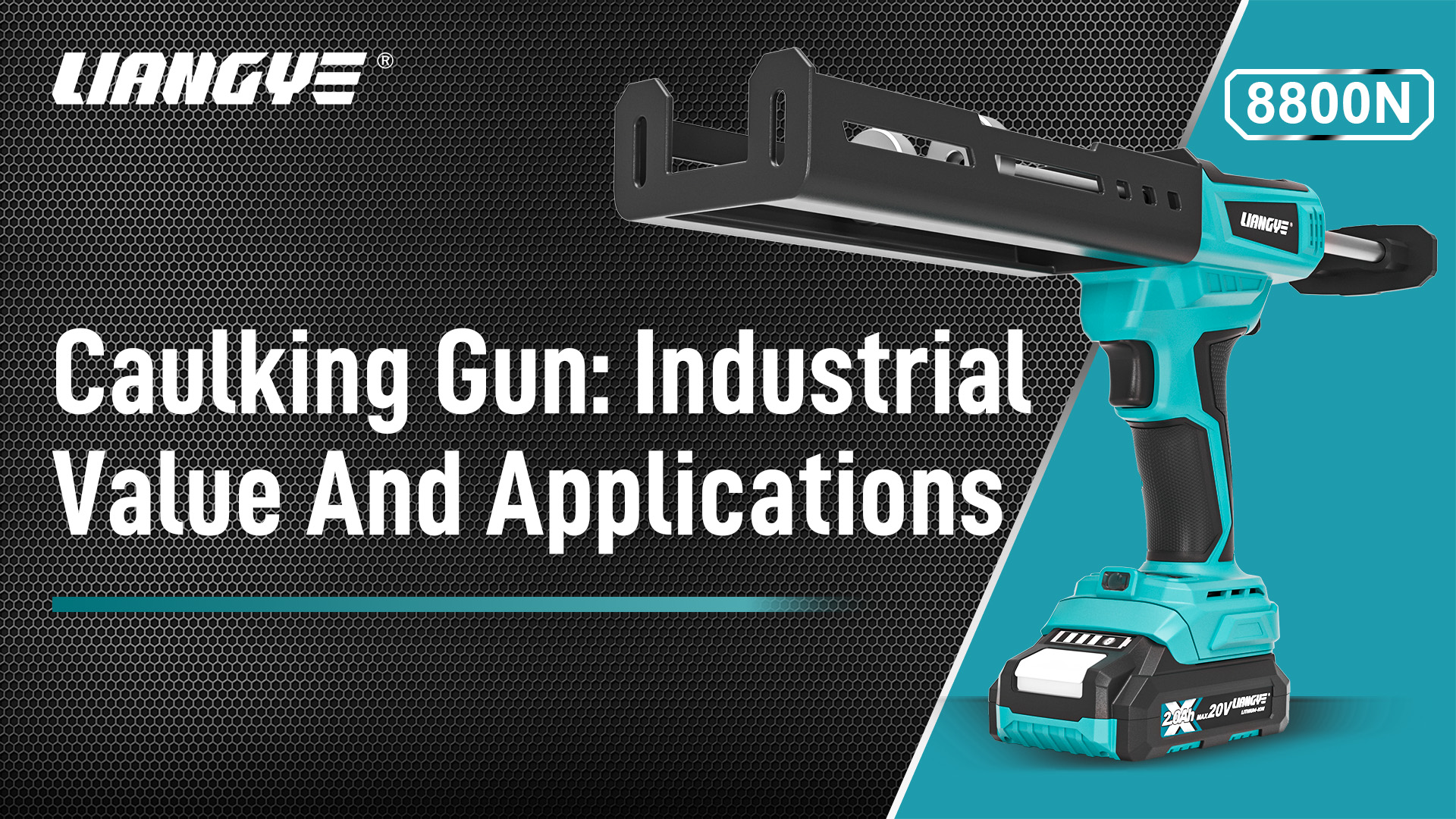
The caulking gun is often overlooked in industrial and construction toolkits, yet it represents a cornerstone of efficiency, precision, and quality in sealing and bonding applications. While commonly associated with home repairs or simple DIY projects, modern caulking guns have evolved to meet the demands of industrial production, professional construction, and specialized manufacturing. Understanding the significance of caulking guns in these contexts provides valuable insight into their selection, application, and impact on productivity.
This article explores the industrial value of caulking guns, different types available, materials and industries they serve, technological developments, and their role in shaping modern manufacturing and construction practices.
Understanding the Caulking Gun as an Industrial Tool
What Makes a Caulking Gun Essential
A caulking gun is designed to dispense sealants, adhesives, and bonding compounds in a controlled manner. Unlike manual application using a spatula or hand pressure, caulking guns provide consistent flow, precise control over volume, and repeatable results. This consistency is crucial in industrial contexts, where uniformity and adherence to specifications can affect product integrity, durability, and compliance with industry standards.
In industrial applications, caulking guns are not merely tools for filling gaps—they are instruments that enhance product quality, improve workflow efficiency, and ensure regulatory compliance. For example, applying sealants with the correct pressure and consistency affects insulation in construction projects, waterproofing in automotive components, and adhesion in electronics assembly.
Types of Industrial Caulking Guns
Manual and Heavy-Duty Trigger Systems
Industrial-grade manual caulking guns are engineered for extended use and durability. Unlike consumer models, these units can handle high-viscosity sealants and larger cartridges. They are often constructed with reinforced frames and ergonomically designed handles to minimize operator fatigue during repetitive tasks.
Manual guns remain relevant in workshops where flexibility, portability, and low maintenance are prioritized. They are also cost-effective for medium-scale industrial operations that do not require automated dispensing systems.
Pneumatic and Air-Powered Systems
Pneumatic caulking guns leverage compressed air to deliver precise sealant flow. These systems are widely used in high-volume manufacturing environments such as automotive assembly, appliance production, and aerospace fabrication. Pneumatic guns allow operators to maintain consistent application across multiple joints and components without fatigue, ensuring speed and precision.
The modularity of pneumatic systems also enables integration with robotic arms or conveyor systems, further automating industrial production processes. These units can handle high-viscosity adhesives and sealants, making them indispensable for professional industrial applications.
Battery-Powered and Electric Caulking Guns
Electric caulking guns combine portability with automation, offering a consistent flow of sealant with minimal manual effort. These systems are gaining popularity in industrial settings where operators need to cover large areas or perform repetitive sealing tasks. Battery-powered caulking guns allow high-precision work in assembly lines without being tethered to air compressors, combining mobility and efficiency.
Materials and Sealants in Industrial Applications
Silicone Sealants
Silicone remains one of the most commonly used materials in industrial caulking applications. Its flexibility, temperature resistance, and durability make it suitable for construction, automotive, and appliance manufacturing. Industrial caulking guns designed for silicone are optimized for smooth extrusion and precise control, which is critical for maintaining seal integrity in demanding environments.
Polyurethane and Epoxy Compounds
Polyurethane and epoxy sealants are widely used in structural bonding, mechanical assembly, and waterproofing applications. These high-viscosity compounds require caulking guns with enhanced plunger systems or pneumatic operation to deliver consistent application. Industrial caulking guns equipped for polyurethane ensure complete coverage and reduce the risk of air pockets or incomplete adhesion.
Acrylic and Latex-Based Materials
Acrylic and latex-based sealants are primarily used in finishing, insulation, and decorative applications. Industrial caulking guns for these materials focus on precision and repeatability, ensuring even bead formation and minimal waste during large-scale application.
Top Industrial Applications for Caulking Guns
1. Construction and Building Envelope Sealing
In the construction industry, caulking guns are indispensable for sealing windows, doors, expansion joints, and facades. Proper sealing enhances building insulation, reduces energy consumption, and protects against water infiltration. Modern industrial caulking guns allow contractors to work efficiently with high-viscosity silicone or polyurethane sealants, even across long seams or irregular surfaces.
2. Automotive Manufacturing and Assembly
Caulking guns are extensively used in automotive production to apply adhesives, gaskets, and sealants to engines, body panels, windshields, and interior components. Consistent application prevents leaks, enhances structural integrity, and supports compliance with safety standards. Pneumatic and electric industrial guns allow assembly line operators to maintain high throughput while reducing operator fatigue.
3. Electronics and Electrical Component Assembly
In electronics manufacturing, caulking guns are employed to apply adhesives and sealants for circuit boards, housings, and connectors. Precision is critical because components are small, delicate, and densely packed. Industrial-grade caulking guns allow for accurate bead control and repeatable placement, reducing waste and improving reliability.
4. Appliance Production
Home and commercial appliances require durable seals for water and air tightness. Caulking guns are used to apply sealants around panels, enclosures, and internal components. Industrial guns enhance consistency, ensuring that each appliance meets quality and safety standards. Battery-powered and pneumatic guns allow rapid application without manual strain.
5. Aerospace and Specialized Equipment
In aerospace and other high-precision manufacturing, caulking guns are used for bonding and sealing structural components, composite materials, and sensitive systems. The precision and consistency of industrial caulking guns ensure that adhesives and sealants meet stringent performance requirements, such as vibration resistance, temperature tolerance, and long-term durability.
Industrial Advantages of Using Caulking Guns
Enhanced Productivity
Industrial caulking guns improve production speed by allowing continuous and controlled application of sealants. Pneumatic and electric systems reduce operator fatigue, enabling longer operation times and consistent results.
Quality and Precision
Uniform bead application ensures structural integrity, waterproofing, and adhesion. Precise dispensing prevents over- or under-application, minimizing waste and improving product quality.
Cost-Effectiveness
By reducing material waste, rework, and labor time, industrial caulking guns contribute to long-term cost savings. While upfront investment in pneumatic or electric systems may be higher than manual models, the return on investment is evident in efficiency and product reliability.
Adaptability
Industrial caulking guns can handle various materials, viscosities, and cartridge sizes. This adaptability makes them suitable for diverse applications, from construction sealing to complex manufacturing assembly.
Trends and Innovations in Industrial Caulking Guns
Ergonomic and Lightweight Designs
Manufacturers are developing caulking guns with ergonomic handles, reduced weight, and balanced designs. These improvements minimize strain during repetitive use, enhancing operator comfort and reducing the risk of fatigue-related errors.
Smart Dispensing Systems
Some modern caulking guns integrate sensors, electronic controls, or flow-rate adjustments. These features allow operators to maintain consistent bead sizes and adapt to material viscosity changes automatically.
Integration with Automation
Industrial caulking guns are increasingly compatible with robotic arms, conveyor systems, and automated assembly lines. This integration supports high-volume production while maintaining precision and quality standards.
Eco-Friendly Materials
As industries prioritize sustainability, caulking guns compatible with low-VOC and environmentally friendly sealants are becoming more prevalent. These systems support compliance with regulations and reduce environmental impact.
Selecting the Right Caulking Gun for Industrial Use
Assess Your Production Requirements
Consider volume, material types, and precision requirements. High-volume assembly lines may benefit from pneumatic or electric systems, while smaller workshops can rely on manual or semi-automatic guns.
Evaluate Material Compatibility
Different sealants require specific plunger strength and nozzle sizes. Ensure that your caulking gun can handle the materials you use consistently and without clogging.
Consider Workspace Constraints
If space is limited or if precise movement is required in tight areas, compact industrial or battery-powered caulking guns may be more suitable.
Factor in Maintenance and Longevity
Select guns with durable construction and easy maintenance. Industrial applications demand tools that can withstand frequent use without degradation.
Conclusion
Industrial caulking guns are far more than simple hand tools—they are critical components in modern manufacturing and construction workflows. From sealing buildings to assembling electronics and aerospace components, these tools enhance productivity, precision, and quality. Whether selecting manual, pneumatic, or electric systems, understanding material compatibility, production volume, and workspace requirements ensures optimal outcomes.
For high-quality industrial caulking guns and professional guidance, contact Liangye Co., Ltd. Their range of tools supports diverse industrial applications, providing reliability, efficiency, and precision for workshops and production lines alike.
FAQ
Q: What makes a caulking gun suitable for industrial applications?
A: Industrial caulking guns provide consistent flow, precision, and durability, allowing high-volume or high-viscosity sealant application.
Q: Can a single caulking gun handle multiple types of sealants?
A: Yes, but compatibility with viscosity, cartridge size, and nozzle type should be verified to ensure consistent performance.
Q: What are the benefits of pneumatic or electric caulking guns?
A: They reduce operator fatigue, maintain consistent bead size, and support high-speed or high-volume production.
Q: How does a caulking gun impact product quality in manufacturing?
A: It ensures uniform application of sealants or adhesives, improving structural integrity, waterproofing, and overall product reliability.


