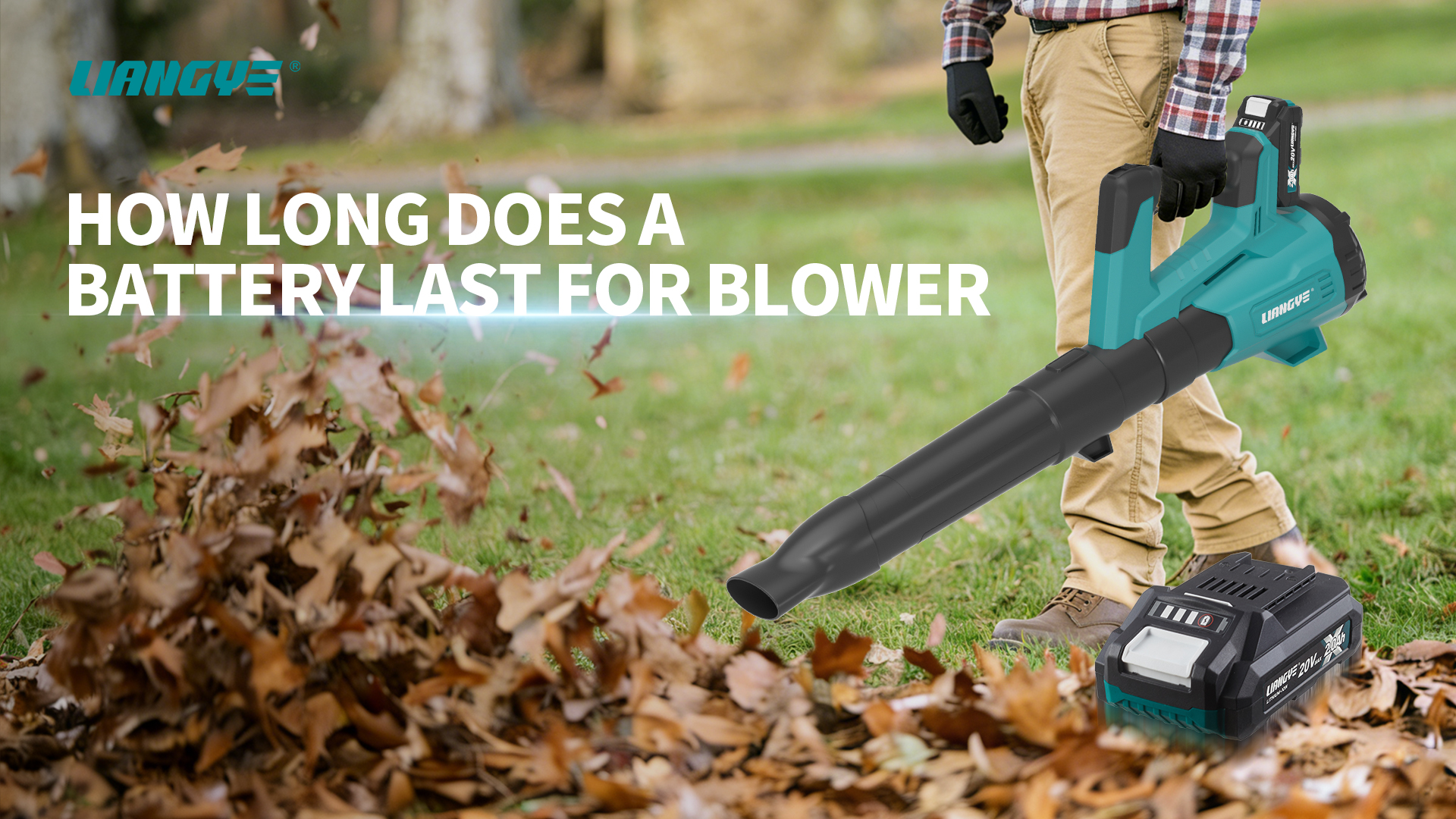
Cordless leaf blowers are becoming increasingly popular for homeowners and professionals who need an efficient, portable, and quiet solution for yard maintenance. One of the most important considerations when buying a cordless leaf blower is how long the battery lasts. The battery life impacts how often you'll need to recharge, how much work you can get done on a single charge, and ultimately, how practical the blower is for your needs.
In this article, we’ll explore the factors that influence battery life in cordless leaf blowers, average battery runtimes, and tips on maximizing battery longevity. By the end, you’ll have a clearer understanding of how long a battery lasts on a cordless leaf blower and what to look for when selecting the right model for your yard care needs.
What Affects Battery Life in a Cordless Leaf Blower?
Several factors determine how long a battery lasts in a cordless leaf blower. Understanding these factors can help you choose the right blower and use it more efficiently to get the most out of each charge.
Battery Capacity and Type
The battery capacity (measured in amp-hours or Ah) directly affects how long a cordless leaf blower will run on a single charge. Higher capacity batteries store more energy, allowing the blower to run for a longer period.
Lithium-ion batteries, the most common type used in cordless leaf blowers, are lightweight, rechargeable, and capable of delivering consistent power over time.
Battery capacity is typically available in ranges from 1.5Ah to 5.0Ah in most consumer-grade cordless blowers. Higher capacity batteries (e.g., 4.0Ah and 5.0Ah) provide longer runtimes but tend to make the blower heavier.
The voltage of the battery is another critical factor. Common voltages for cordless leaf blowers are 20V, 40V, and 60V. A higher voltage provides more power, which can translate into stronger airflow, but it also typically results in a shorter battery life per charge unless you have a larger capacity battery.
Power Settings and Usage
Most cordless leaf blowers come with multiple power settings that allow users to adjust the airflow according to the task at hand.
On high power settings, the blower uses more energy, which reduces the runtime of the battery. For heavy-duty tasks such as clearing large piles of wet leaves, the battery may drain faster.
On low or medium settings, the blower consumes less power, allowing the battery to last longer. Using the blower at lower settings for light tasks, such as clearing dry grass clippings, can significantly extend the battery life.
When choosing a cordless leaf blower, consider the type of tasks you’ll perform regularly. If you often need high power to clear thick, wet leaves or debris, you’ll need a larger capacity battery or a more powerful blower.
Battery Age and Condition
As with any rechargeable battery, the age and condition of the battery will impact its runtime. Over time, batteries lose capacity due to the natural wear-and-tear of charging cycles. A new battery can hold a charge for much longer than an older one, but after many charge cycles, its capacity will gradually decrease.
Tips for maintaining your battery:
Avoid overcharging the battery; it’s best to unplug it once it reaches full charge.
Never completely drain the battery to 0%. Lithium-ion batteries last longer when kept between 20% and 80% charge.
Regularly inspect the battery for signs of wear, swelling, or leakage, as damaged batteries will perform poorly and may need to be replaced.
Typical Battery Life for Cordless Leaf Blowers
When shopping for a cordless leaf blower, one of the most important questions is, “How long does the battery last?” The runtime varies based on several factors, including the model, battery capacity, and usage. However, here’s what you can generally expect in terms of battery life.
Average Run Time
On a single charge, the average battery life for a cordless leaf blower typically falls in the following ranges:
20V cordless leaf blowers: These tend to run for 20-30 minutes on a full charge with a 2.0Ah battery. For lighter tasks, such as clearing small amounts of leaves, this may be sufficient.
40V cordless leaf blowers: These models can offer 30-45 minutes of runtime on a 4.0Ah battery. They are generally more powerful and suitable for medium-sized yards or larger cleanup jobs.
60V cordless leaf blowers: The most powerful models on the market, with a runtime of 40-60 minutes on a 5.0Ah battery. These are designed for large properties or heavy-duty jobs that require extended use.
If your work requires continuous usage for longer periods, look for models that offer swappable batteries or invest in additional batteries so you can work uninterrupted.
Comparison of Different Models
Different models have different runtimes based on their battery capacity and power settings. Below is a comparison of several popular cordless leaf blowers:
Model | Battery Capacity | Average Runtime | Airflow (CFM) | Max Speed (MPH) | Weight | Price Range |
Liangye 20V Cordless Leaf Blower | 2.0Ah | 20-30 minutes | 350 CFM | 150 MPH | 5 lbs | $80 - $120 |
Liangye 40V Cordless Leaf Blower | 4.0Ah | 30-45 minutes | 450 CFM | 180 MPH | 7 lbs | $150 - $200 |
Makita 18V LXT Leaf Blower | 2.0Ah | 15-25 minutes | 280 CFM | 120 MPH | 3.6 lbs | $130 - $160 |
Ryobi 40V Leaf Blower | 4.0Ah | 30-40 minutes | 480 CFM | 160 MPH | 6.8 lbs | $100 - $150 |
This table gives you a clear comparison of several models, their battery capacities, run times, and airflow performance. If you need more runtime, consider upgrading to a 40V or 60V model.
![Cordless Leaf Blower]()
How to Maximize Battery Life on a Cordless Leaf Blower
To get the most out of your cordless leaf blower’s battery, it’s essential to follow good charging practices and use the tool efficiently. Here are some tips to maximize battery life:
Proper Charging Practices
Avoid overcharging: Always unplug the battery once it’s fully charged. Overcharging can decrease its lifespan.
Charge at the right time: Lithium-ion batteries last longer when you avoid letting them completely discharge or staying fully charged for too long. Try to keep your battery charge between 20% to 80%.
Use the correct charger: Always use the manufacturer’s recommended charger for your specific battery to ensure optimal charging.
Optimal Usage Tips
Use lower power settings: If your yard work doesn’t require maximum airflow, use a lower power setting. This will significantly extend battery life.
Break tasks into smaller segments: If your blower’s battery is running low, consider doing your work in segments. Use the blower on a lower power setting for smaller tasks and reserve the higher power for heavier debris.
Avoid prolonged idle time: Letting the blower run while idle (i.e., during breaks) can quickly drain the battery. Only operate the blower when it’s actively being used.
Battery Maintenance
Regularly clean the battery and blower: Dust and debris can accumulate over time, leading to overheating and reduced battery efficiency. Make sure the blower and battery connections are clean.
Store in a cool, dry place: Extreme temperatures can damage the battery. Store the blower and battery in a climate-controlled environment to prevent damage from heat or cold.
Inspect battery health: If you notice your battery isn’t lasting as long as it used to, it might be time for a replacement. Most manufacturers offer replacement batteries if needed.
How to Choose the Right Cordless Leaf Blower for Your Needs
When choosing a cordless leaf blower, battery life is crucial, but it’s not the only consideration. Other factors, like power requirements, yard size, and comfort, should be taken into account.
Consider Your Yard Size
If you have a small yard, a 20V cordless leaf blower with a 2.0Ah battery should be more than enough. For medium to large yards, consider a model with a 40V or 60V battery for better performance and longer runtime.
Power Requirements
Light-duty tasks (small leaves, grass clippings) don’t require excessive power. A 20V or 40V model will likely be sufficient.
Heavy-duty tasks (wet leaves, large piles of debris) will require higher power, so a 40V or 60V model with a larger battery will give you the performance you need.
Battery Longevity and Cost
While models with larger batteries (40V, 60V) offer longer runtimes, they are typically more expensive. If battery life is essential, weigh the upfront cost against the long-term convenience of a more powerful blower with a longer runtime.
Conclusion
Battery life is a crucial consideration when choosing a cordless leaf blower. Understanding how factors such as battery capacity, power settings, and usage patterns impact runtime will help you make a more informed decision. Cordless leaf blowers are known for their convenience, quiet operation, and eco-friendliness, but they typically offer shorter runtimes compared to gas-powered models.
At Liangye, we offer a range of cordless leaf blowers designed to provide excellent performance while maximizing battery life. By choosing the right model based on your specific yard size and power needs, and properly maintaining the battery, you can ensure your blower works efficiently for years to come. Our models are built for durability, ease of use, and sustainability, making them ideal for homeowners and professionals alike.
We invite you to explore our selection of high-performance cordless leaf blowers. Our team is available to assist with finding the perfect model for your needs, ensuring you get the most out of your investment. Feel free to reach out to us for more information or to discuss your requirements with one of our experts.
FAQ
Q1: How long does a typical 20V cordless leaf blower battery last?
A1: On average, a 20V cordless leaf blower battery lasts between 20 and 30 minutes on a single charge, depending on the power setting and type of task.
Q2: Can I extend the battery life of my cordless leaf blower?
A2: Yes, you can extend the battery life by following proper charging practices, using lower power settings, and regularly maintaining the battery.
Q3: How long does it take to charge a cordless leaf blower battery?
A3: Charging times vary by battery size, but most models take between 1 and 4 hours to fully charge, depending on the capacity of the battery.
Q4: Are cordless leaf blowers as powerful as gas models?
A4: While cordless leaf blowers are generally less powerful than gas-powered models, they are more than sufficient for light-to-medium yard work. For larger properties or heavier debris, you may need a gas-powered model.


