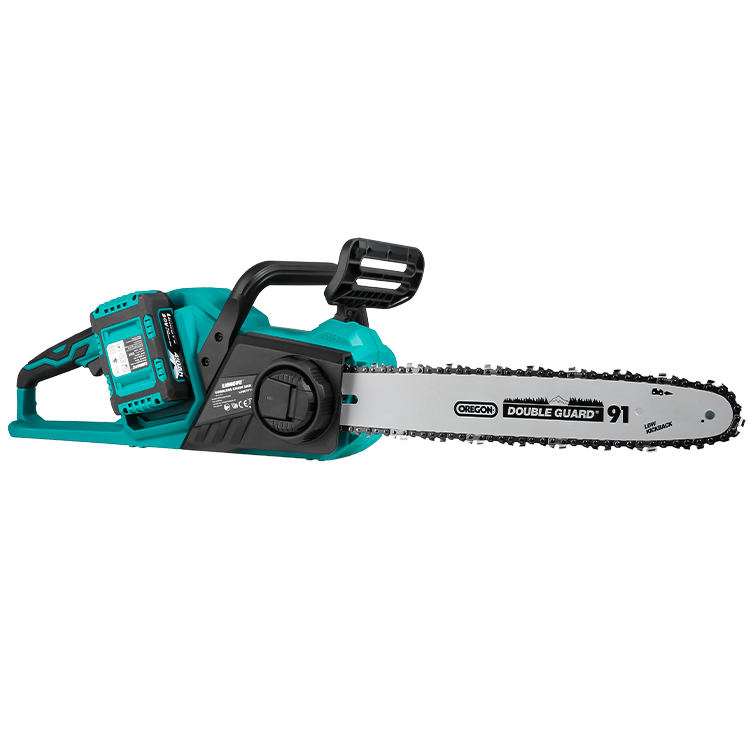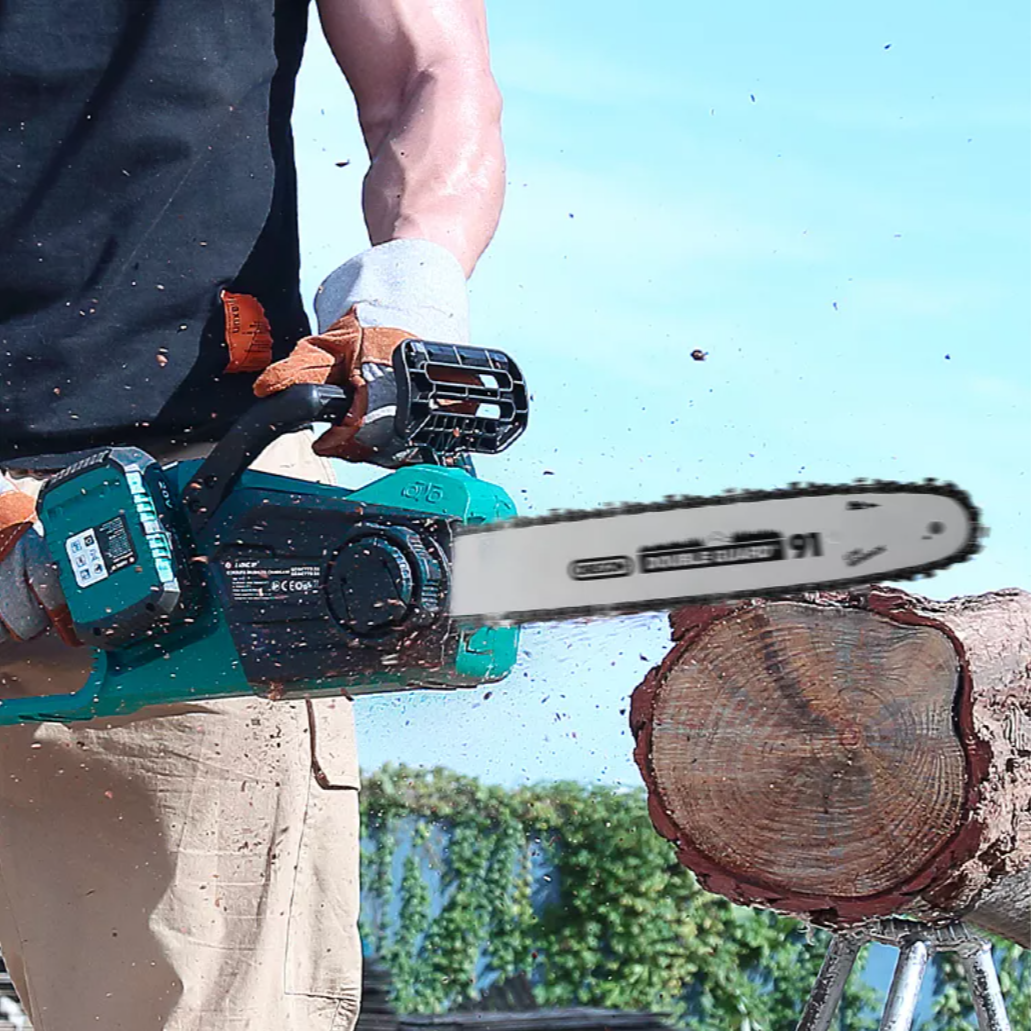
The shift toward electric yard tools completely changes how we operate outdoor power equipment. Removing the gas engine eliminates dangerous idling, but it introduces instant, high-torque starts. You must understand these unique dynamics before starting your next landscaping project. Buyers often prioritize bar length and battery voltage during their research. Sadly, they overlook how modern cordless chainsaw safety features prevent severe kickback and accidental engagement.
We need to look beyond pure cutting power to stay safe in the yard. It is vital to establish a clear, evidence-based evaluation framework. This guide helps you assess critical safety mechanisms before finalizing a purchase. We will explore active braking systems, operational controls, and ergonomic designs. You will learn exactly what makes a modern saw reliable and secure. Let us dive into the essential components you should demand.
Key Takeaways
The immediate torque of a battery powered chainsaw requires robust, dual-action lock-off switches to prevent accidental triggers.
An electric brake chainsaw offers faster stopping times during kickback events compared to traditional mechanical-only brakes.
Tool-free chain tensioning is not just a convenience; it is a critical safety feature that prevents chain derailment by ensuring proper tension adjustments are easy to maintain in the field.
Evaluating ergonomics and battery placement is essential, as fatigue-induced human error remains a leading cause of chainsaw accidents.
The Reality of Battery-Powered Chainsaw Safety: Instant Torque vs. No Idling
Many homeowners assume quieter tools are inherently safer tools. We must debunk this dangerous assumption immediately. A battery powered chainsaw operates much more quietly than its gas-powered counterpart. It does not idle continuously. This lack of idling provides a massive safety benefit. You no longer walk around your property carrying a vibrating, live engine. The chain stops moving entirely the moment you release the trigger.
However, this silent operation creates a new set of risks. Gas engines require time to spool up and engage a centrifugal clutch. Electric motors behave entirely differently. They deliver their maximum torque instantly. The very millisecond you pull the trigger, the chain accelerates to top speed. There is no gradual buildup. There is no audible warning. You get raw cutting power immediately.
The quiet nature of the tool often creates a false sense of security. Inexperienced users might handle the saw carelessly. They forget the tool remains highly dangerous even when silent. You might rest the saw against your leg or casually brush against the trigger handle. If the safety mechanisms fail, the saw will activate instantly.
Buyers must apply a strict evaluation lens here. You must verify the tool clearly indicates its operational status. Look for models featuring visual "armed" indicators. High-quality saws use bright LED lights. A green light tells you the saw is hot and ready to cut. A red light indicates the safety is engaged. You must distinguish easily between a saw powered on and a saw ready to strike. Never trust a silent tool implicitly.
![Cordless chainsaw safety features and braking mechanisms]()
Non-Negotiable Active Safety Mechanisms (Braking Systems)
A kickback event is the most terrifying experience in chainsaw operation. Kickback occurs when the upper tip of the guide bar strikes a solid object. The saw violently throws itself upward and backward toward the operator. You cannot overpower a kickback through physical strength. You must rely entirely on the saw's braking systems to protect you.
Mechanical chain brakes serve as the absolute industry baseline. Every saw must include a front hand guard. During a kickback, the saw rotates upward. Your left wrist naturally rolls forward and strikes this guard. Pushing the guard forward engages a steel band. This band clamps down on the drive sprocket. It forces the chain to a violent, immediate halt. We consider this a mandatory requirement, not a premium upgrade.
However, modern technology offers significant improvements. You should strongly consider an electric brake chainsaw for optimal protection. These models feature electronic inertia sensors. They do not wait for your wrist to strike the front guard. The moment the saw detects sudden, violent upward acceleration, it cuts the motor's power electronically.
Electric brakes stop the chain in fractions of a second. They drastically reduce the severity of potential injuries. A mechanical brake still allows the motor to spin briefly against the stopped sprocket. An electric brake kills the power at the source. This dual-action approach saves lives.
Apply strict shortlisting logic during your purchase journey. Reject any model relying solely on a trigger release to stop the chain. Some cheap imports lack a dedicated kickback brake entirely. They simply coast to a stop when you let go. Never buy these models regardless of their price point. Your safety demands dedicated, redundant braking systems.
| Brake Type | Activation Method | Stopping Speed | Primary Benefit |
| Mechanical Brake | Physical wrist strike on front guard | Fast (~0.15 seconds) | Reliable, industry-standard baseline safety |
| Electronic Inertia Brake | Internal accelerometer detects upward motion | Instant (~0.05 seconds) | Kills motor power before physical contact occurs |
Operational Controls and Power Management
Safe operation starts long before the chain touches the wood. Operational controls dictate how safely you handle the tool between cuts. You need deliberate, well-designed switches to prevent devastating accidents.
Dual-action lock-off triggers represent a core safety pillar. A safe design requires deliberate, two-step hand activation. You must press a secondary button with your thumb before pulling the primary trigger with your fingers. This prevents accidental starts when picking up the tool. It also protects you if you accidentally brush the saw against your leg while walking. If the saw requires only a single squeeze to activate, it is inherently dangerous.
The motor technology itself plays a huge role in control. A brushless chainsaw offers massive safety advantages over older brushed models. Brushless motors use internal computers to regulate current. They offer precise speed control. They sense resistance in the wood and adjust power output dynamically.
This intelligent power delivery reduces sudden jerks. Older motors often surge unpredictably when they clear a tough knot. Brushless technology maintains a smooth, even cutting pace. Furthermore, these motors prevent dangerous overheating during heavy loads. A cool motor runs predictably. Predictable tools keep you safe.
You must also evaluate power scaling carefully. A 40V cordless chainsaw hits the perfect sweet spot for most residential users. It delivers enough cutting power to slice through thick oak branches. Underpowered 18V saws often bind and get stuck in the wood. A bound chain drastically increases your risk of kickback when you try to yank it free.
However, you do not want unmanageable power. Massive 80V professional saws generate extreme rotational forces. If a professional saw kicks back, the average homeowner cannot hold it down. The 40V class balances necessary torque against manageable weight. You get clean cuts without introducing professional-level hazards.
Best Practices for Operational Safety
Always keep your right hand on the rear handle and your left hand firmly wrapping the front handle.
Never tape down or bypass the thumb lock-off switch.
Wait for the chain to reach full speed before initiating your cut.
Release the trigger immediately if the saw begins to bind in the wood.
Maintenance-Driven Safety: Keeping the Chain on the Bar
Many operators treat maintenance as a chore. You must reframe maintenance as a critical safety imperative. A poorly maintained saw behaves unpredictably. Unpredictable tools cause accidents. Keeping the chain properly adjusted and lubricated is your first line of defense.
Tool-free chain tensioning serves as a vital safety feature. A loose chain poses a severe hazard. If the chain sags, it can jump off the guide bar entirely. A derailed chain whips backward toward your legs at terrifying speeds.
Historically, tensioning required a specialized scrench tool. People often lost this tool or left it in the garage. They ignored a sagging chain because fixing it felt inconvenient. Tool-free systems use a large external dial. You simply twist the dial to tighten the chain. This brilliant design encourages users to perform necessary mid-job adjustments. When adjustments become easy, people actually do them.
Automatic oiling systems are equally important. Chainsaws require constant lubrication to reduce friction. A dry chain heats up rapidly. Metal expands as it heats. The chain stretches, loosens, and eventually binds in the wood. A binding saw significantly increases your kickback risk.
Evaluate models based on their oiling reliability. Look for transparent or translucent oil reservoirs. You need to see the oil level at a glance. If you cannot see the oil, you will run the saw dry. Ensure the auto-lubrication delivery system provides a steady, even flow across the bar.
Always remember the implementation reality. Even the best tensioning systems require active operator participation. A brand new chain stretches significantly during its first fifteen minutes of use. You must check the tension frequently as the chain heats up during a project. A tight cold chain often becomes a dangerously loose hot chain.
Common Mistakes to Avoid
Overtightening the chain until it cannot move freely by hand.
Using standard motor oil instead of specialized, tacky bar and chain oil.
Failing to clean wood chips out of the tensioning gear cover.
Ignoring the chain tension after the first few cuts of the day.
Ergonomics, Weight Distribution, and Fatigue Reduction
We rarely discuss ergonomics in the context of pure safety. This is a massive oversight. Fatigue-induced human error remains a leading cause of chainsaw accidents. A tired operator makes sloppy cuts. A tired operator drops their guard. A tired operator reacts slowly to a kickback.
Battery placement directly dictates the saw's balance. Lithium-ion batteries weigh several pounds. If the manufacturer places the battery too far back, the saw tips backward. If placed too high, the saw feels top-heavy and unstable.
Analyze how the battery position affects the center of gravity. A well-balanced saw naturally rests perfectly level when you hold it by the top handle. It requires zero wrist strain to keep it horizontal. This balance prevents your forearms from burning out after ten minutes of work. A balanced tool acts as an extension of your body.
Vibration dampening also plays a crucial role. Cordless saws vibrate significantly less than gas models. However, the spinning chain still generates high-frequency vibrations. Prolonged use causes hand-arm vibration syndrome. Your fingers go numb. You lose grip strength.
Look for extensive rubberized overmolding on both handles. Premium saws use isolated handle designs. They physically separate the grip areas from the motor housing using rubber bushings. This prevents motor vibrations from traveling up your arms.
Frame weight and ergonomics directly as safety features. A lighter, smoother saw keeps your mind sharp. It allows you to maintain a firm, secure grip throughout the entire job. Never buy a saw you struggle to lift comfortably above your waist.
Decision Framework: Shortlisting the Right Chainsaw for Your Needs
You now understand the critical safety mechanisms. You must synthesize this knowledge into a practical decision framework. Not every saw suits every operator. You must match the tool to your specific reality.
First, assess the user realistically. Are you a homeowner doing occasional storm cleanup? You likely need a lightweight 12-inch or 14-inch saw. Are you a prosumer bucking heavy firewood every weekend? You need a robust 16-inch or 18-inch model. Match the tool's weight and power output to your physical capability. Buying too much saw makes you clumsy. Buying too little saw forces you to push aggressively, which causes dangerous binding.
Second, check the compliance ratings. Look for certifications from recognized safety testing laboratories. You want to see UL (Underwriters Laboratories) or CSA (Canadian Standards Association) stamps. These organizations rigorously test electrical and mechanical safety claims. They verify the inertia brakes actually stop the chain in milliseconds. They ensure the battery won't catch fire under heavy load. Never trust unverified claims from unknown brands.
Finally, take next-step actions before committing. Recommend physically handling the saw if possible. Go to a local hardware store. Pick the display model up. Squeeze the trigger lock-out mechanism. Does it feel natural or awkward? Test the weight balance. Can you easily adjust the tool-free tensioner while wearing thick leather work gloves?
You are investing in a dangerous piece of equipment. You are also committing to a specific battery ecosystem. Ensure the saw feels safe, comfortable, and intuitive in your own hands.
Conclusion
The safest cordless chainsaw does not rely on a single feature. It combines instant-stopping electronic brakes, reliable tool-free tensioning, and precise ergonomic balance. Moving away from gas eliminates idle-related accidents, but the silent, instant torque of battery models demands profound respect.
Do not let bar length dictate your purchasing decision. Review spec sheets carefully for dual-braking systems and deliberate trigger lock-outs. Prioritize overall safety, clear visual indicators, and ease of maintenance over raw cutting speed alone. A safe, well-maintained saw guarantees you will finish your yard work confidently and injury-free.
FAQ
Q: Are cordless chainsaws safer than gas chainsaws?
A: They eliminate the risks associated with storing combustible fuel and carrying an idling engine. However, their instant torque requires strict adherence to safety protocols and reliable trigger lock-outs.
Q: What causes a chainsaw to kickback, and how do battery saws prevent it?
A: Kickback occurs when the upper tip of the guide bar strikes an object. Safe battery saws mitigate this using inertia-activated mechanical and electronic chain brakes that stop the chain instantly.
Q: How often should I use tool-free chain tensioning during a job?
A: A new chain will stretch significantly during its first few uses. Tension should be checked before starting, and continuously monitored throughout the job to prevent derailment.