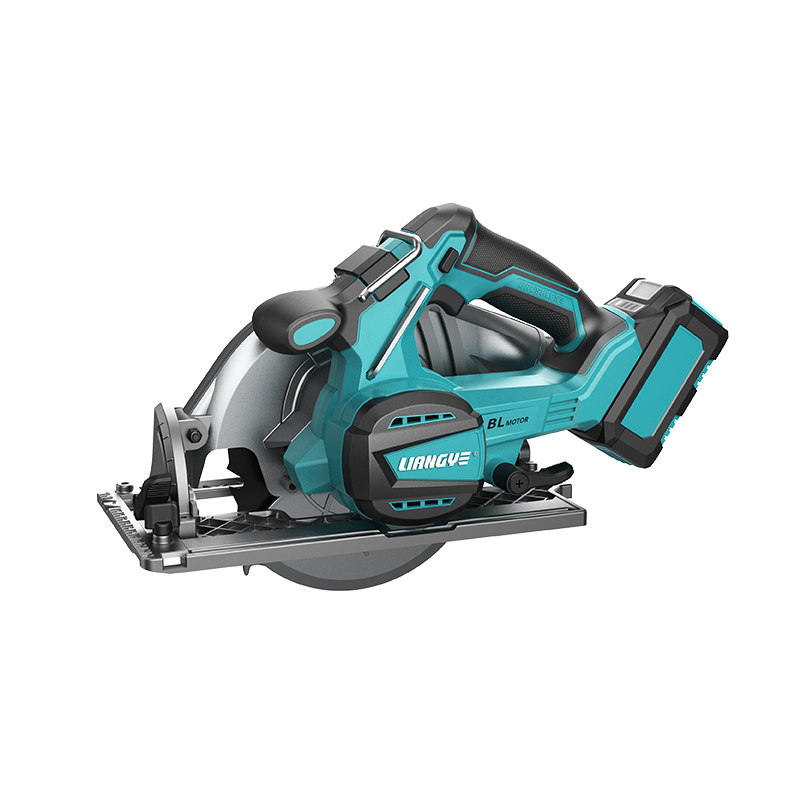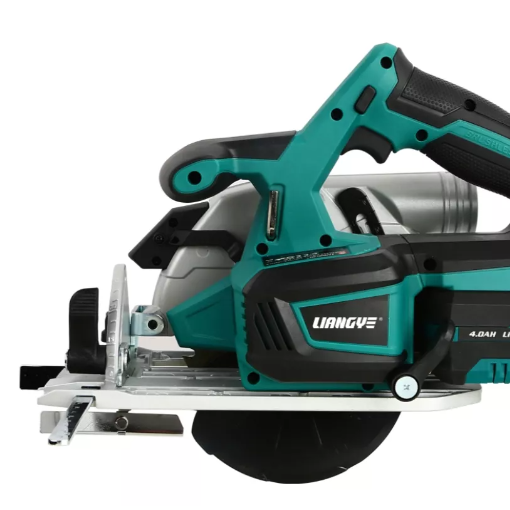
Selecting the right cordless circular saw requires matching the tool's maximum physical capacity to your specific project materials. Purchasing an undersized saw forces you into mandatory two-pass cuts. Conversely, an oversized saw adds unnecessary weight. It also increases user fatigue during repetitive tasks.
Brands typically test their maximum depth ratings under ideal, laboratory-like conditions. Real-world applications tell a completely different story. When you engage steep bevel angles or cut dense hardwoods, you demand more from your tool. These scenarios require a deeper evaluation of blade diameter, motor power, and baseplate geometry.
Our goal is to provide a comprehensive technical evaluation framework. We will help you shortlist the correct saw specifications. You will learn how depth limits, base geometry, and motor capabilities interact. This knowledge ensures you choose a tool capable of handling your daily workflow without dangerous stalling or binding.
Key Takeaways
A standard 7-1/4" circular saw typically offers ~2-7/16" of depth at 90°, sufficient for a single-pass cut through 2-by dimensional lumber.
Engaging a 45° bevel significantly reduces effective cutting depth (often by 20–30%), directly impacting material compatibility.
Maximizing cutting depth heavily taxes the motor; brushless technology is highly recommended to prevent stalling in dense materials.
Blade Diameter vs. Cordless Circular Saw Cutting Depth
Understanding your cordless circular saw cutting depth begins with evaluating nominal blade sizes. The diameter of the blade dictates the absolute maximum reach below the baseplate. We must connect these nominal sizes to their physical 90-degree depth limits. This establishes realistic baseline expectations for your projects.
Different blade sizes serve entirely different structural purposes. If you match the blade to the wrong material, you compromise safety and efficiency. Here is how common blade diameters map to real-world outcomes:
5-1/2" Blades: These provide approximately 1-5/8" of maximum depth. They are ideal for 1x materials and sheet goods. You can easily cut plywood, MDF, or OSB panels. They keep the tool light and highly maneuverable.
6-1/2" Blades: These typically offer a 2-1/8" maximum depth. They barely clear standard 2x dimensional lumber, which is 1.5" thick. This leaves almost no margin for error. If the board is slightly warped, the blade might not break through cleanly.
7-1/4" Blades: These deliver roughly 2-7/16" to 2-5/8" of depth. They represent the industry standard. Professionals rely on them for heavy framing and deep crosscuts. They handle stacked materials with ease.
You might assume a larger blade is always superior. This is a common mistake. Increasing the blade size introduces significant trade-offs. A larger steel disc carries more rotational mass. The motor must work harder to spin it up to optimal RPMs. This extra mass creates a heavier tool overall.
Furthermore, larger blades drain battery reserves much faster. Pushing a massive blade through dense oak demands high amperage. If you only cut 3/4" cabinet plywood, pushing a massive 7-1/4" blade wastes energy. You endure extra arm strain for no practical benefit. Evaluate your daily cut lists carefully. Choose the smallest blade diameter capable of handling your thickest common material in a single pass.
How Adjusting the Bevel Angle Circular Saw Capacity Works
Tilting the baseplate of your saw changes the fundamental geometry of the cut. When you operate a bevel angle circular saw, the blade no longer travels straight down. It enters the wood at a slant. This diagonal path increases the physical distance the blade must travel to break through the bottom of the material.
Because the blade travels along a hypotenuse, its vertical reach drops significantly. Many users overlook this mathematical reality. They buy a saw based on its 90-degree rating. They soon discover it fails to crosscut dimensional lumber when tilted.
Let us look at the hard data regarding depth drop-off. A premium saw cutting 2-7/16" at 90 degrees loses substantial reach when beveled. At a standard 45-degree bevel, that same saw may only cut 1-13/16" deep. You lose over half an inch of usable capacity. This 20 to 30 percent reduction directly limits what materials you can process.
Some premium models push bevel capacities further. You can find baseplates that tilt to 50 or even 56 degrees. Roof framers use these extreme angles for complex rafter tails and birdsmouth cuts. However, at 56 degrees, your cutting depth shrinks drastically. You might barely penetrate a standard 2x4.
This introduces serious implementation risks. Imagine using a 6-1/2" saw to cut a 2x4 at a 45-degree angle. You are operating at the tool's absolute physical limit. If you press too hard, the baseplate might flex. If you misalign the cut slightly, the blade fails to pierce the bottom edge. This creates an incomplete cut. You are then forced into a dangerous flip-and-re-cut scenario. Re-entering a partially angled kerf from the opposite side drastically increases the risk of violent kickback. It also ruins the precision of the joint.
![Article Image]()
Motor Specifications: Sustaining RPM at Maximum Depth
Maxing out the depth or pushing a steep bevel angle immerses more blade surface area into the wood. This increases kerf friction exponentially. The wood fibers squeeze against the steel plate. This friction demands immense torque from the motor to maintain speed.
When evaluating a 20V circular saw, you must look past nominal voltage marketing. A "20V Max" label simply describes the battery's initial resting voltage. It drops to a nominal 18V under load. What truly matters is the actual sustained wattage the motor can deliver when buried in dense material. A high-voltage sticker means nothing if the internal components cannot handle heavy amperage.
This brings us to the distinct advantage of modern motor design. A brushless circular saw operates differently than older brushed models. Traditional brushed motors rely on physical carbon blocks rubbing against a commutator. This friction generates excessive heat. When you perform full-depth ripping, brushed motors often stall. The heat buildup can easily melt internal wiring or burn out the tool entirely.
Brushless motors eliminate this physical friction. They use electronic microprocessors to detect resistance at the blade. When the blade hits a dense knot, the brain of the tool instantly calls for more power. It adjusts the current draw dynamically. This ensures consistent RPMs. High, steady RPMs prevent the blade from binding during deep angled cuts.
We must also practice trust and assumption transparency regarding batteries. Even the best brushless motor requires adequate fuel. Battery amp-hour (Ah) capacity plays a critical role in sustained performance. A high-end brushless saw will severely underperform on deep cuts if paired with a low-capacity 2.0Ah battery. The small battery pack cannot discharge energy fast enough. It suffers from severe voltage sag. The tool's computer will trigger thermal throttling to protect the cells. For full-depth framing applications, you need at least a 4.0Ah or 5.0Ah pack to sustain peak torque.
Shortlisting Your Cordless Wood Cutting Saw by Application
Choosing the best cordless wood cutting saw requires an honest assessment of your daily tasks. Buying a saw based on "what-if" scenarios leads to heavy, cumbersome tool bags. We recommend utilizing a targeted decision matrix to find your ideal match.
| Primary Application | Ideal Blade Size | Key Priorities | Typical Materials |
| Cabinetry & Trim | 5-1/2" or 6-1/2" | Track compatibility, low weight, precision | Plywood, MDF, 1x pine, melamine |
| General Framing | 7-1/4" | Single-pass depth, high torque, 45° bevel capability | 2x4s, 2x6s, OSB sheathing, LVL beams |
| Decking & Heavy Timbers | 8-1/4" or larger | Maximum plunge depth, multi-battery platforms | 4x4 posts, 6x6 beams, wet treated lumber |
For cabinetry and trim work, prioritize track compatibility and lower weight. A 5-1/2" or 6-1/2" saw is highly sufficient. You maneuver the tool easily across large sheet goods without fighting gravity.
For general framing, a 7-1/4" model is virtually mandatory. You need guaranteed single-pass cuts through stacked materials. You must confidently clear 2x4s even when cutting at steep bevel angles. A smaller saw forces you to flip boards over constantly. This wastes time and compromises structural accuracy.
If you build decks or work with heavy timbers, you need maximum capacity. Cutting 4x4 posts requires an 8-1/4" or larger saw. These massive tools often require multi-battery platforms to deliver enough voltage. Alternatively, you must accept making two precise passes with a standard 7-1/4" saw.
Here is your next-step action. Assess the material thickness you cut most frequently. Multiply that number by 1.25. This simple formula reveals your ideal minimum cutting depth capability. The extra 25 percent buffer guarantees the blade teeth clear the bottom of the wood cleanly. It prevents tear-out and reduces dangerous friction.
Managing Precision: Guides, Tracks, and Deep-Cut Alignment
Accuracy becomes extremely challenging when operating at maximum depth limits. Pushing a 7-1/4 circular saw through a dense 2x6 at a 45-degree angle tests your physical control. The stability problem is real. Freehand cutting inaccuracies are heavily magnified at these limits. Any slight twisting of your wrist causes the massive blade to bind against the wood fibers. This dramatically increases the risk of violent kickback.
You must rely on mechanical accessory solutions to ensure safe, straight cuts. These accessories transform a rough framing tool into a precision instrument.
Rip Fences and Edge Guides: These metal brackets attach to the front of the baseplate. They ride along the factory edge of your material. They are absolutely necessary for consistent parallel cuts. However, they are limited by stock width. Most standard fences only extend about 6 to 8 inches.
Track Saw Guides: Many professionals evaluate aftermarket track adapters to achieve cabinet-grade straightness. Systems from Milescraft or Kreg convert standard circular saws into makeshift track saws. You must note one critical trade-off. Adding a track or sled reduces your maximum cutting depth. You lose capacity equal to the thickness of the guide's baseplate. This offset typically ranges from 1/4" to 3/8". Factor this loss in before attempting deep cuts.
Laser Guides and Shadow Lines: Many modern saws feature visual alignment aids. Assess their utility based on your environment. Lasers project a red line ahead of the tool. However, lasers require frequent calibration and often wash out in bright sunlight. Shadow lines utilize a bright LED positioned directly above the blade. The blade casts a crisp shadow exactly where the teeth will fall. Shadow lines require zero calibration. They are generally much more accurate than lasers.
Properly managing your alignment minimizes blade binding. It keeps the motor running cool. It ensures your structural joints fit tightly together on the first attempt.
Conclusion
Selecting the ideal cordless circular saw requires a calculated balance. You must weigh the nominal blade size against the harsh reality of bevel depth loss. You must also account for motor efficiency and battery capacity. Choosing a saw based entirely on its 90-degree laboratory rating leaves you vulnerable on real-world job sites.
To summarize our core findings:
Calculate your required depth by factoring in a 25% safety buffer beyond your thickest common material.
Remember that engaging a 45-degree bevel strips away 20% to 30% of your vertical reach.
Prioritize high-capacity battery packs (4.0Ah+) to prevent thermal throttling during deep cuts.
Account for the baseplate thickness if you plan to use aftermarket track sleds.
For a general-purpose professional setup, we confidently recommend a 7-1/4" brushless model on a 20V platform. This configuration offers the highest overall versatility. It guarantees you will not outgrow the tool when beveling heavy dimensional lumber. It provides the necessary torque, reach, and durability to handle diverse cutting environments safely.
FAQ
Q: Does adding a track guide reduce my circular saw's cutting depth?
A: Yes. When you place a circular saw onto an aftermarket track or sled, the blade must first pass through the thickness of the guide's baseplate. This offset typically reduces your maximum cutting depth by 1/4 inch to 3/8 inch. You must subtract this dimension from your saw's stated capacity to determine your true kerf clearance.
Q: Why does my circular saw stall when cutting at a 45-degree bevel?
A: Stalling usually occurs due to severe blade binding, a lack of motor torque, or high battery discharge rates. A steep bevel angle immerses more blade surface area into the wood, creating massive friction. If your saw lacks a brushless motor or is paired with a low-capacity battery, the system cannot sustain the necessary RPMs and shuts down.
Q: Can a 6-1/2 inch circular saw cut a 2x4 at a 45-degree angle?
A: Mathematically, it operates at its absolute limit. A typical 6-1/2 inch saw at a 45-degree bevel clears a 1.5-inch thick board by less than 1/8 of an inch. This leaves zero margin for error. Any baseplate flex, material warping, or user misalignment will result in an incomplete cut.
Q: How do I safely adjust the cutting depth?
A: Always unplug the tool or remove the battery first. Loosen the depth adjustment lever and move the baseplate until the blade extends just past your material. The golden rule of thumb dictates the blade should extend no more than 1/4 inch or one full tooth below the wood. This minimizes friction, prevents binding, and dramatically reduces kickback risk.