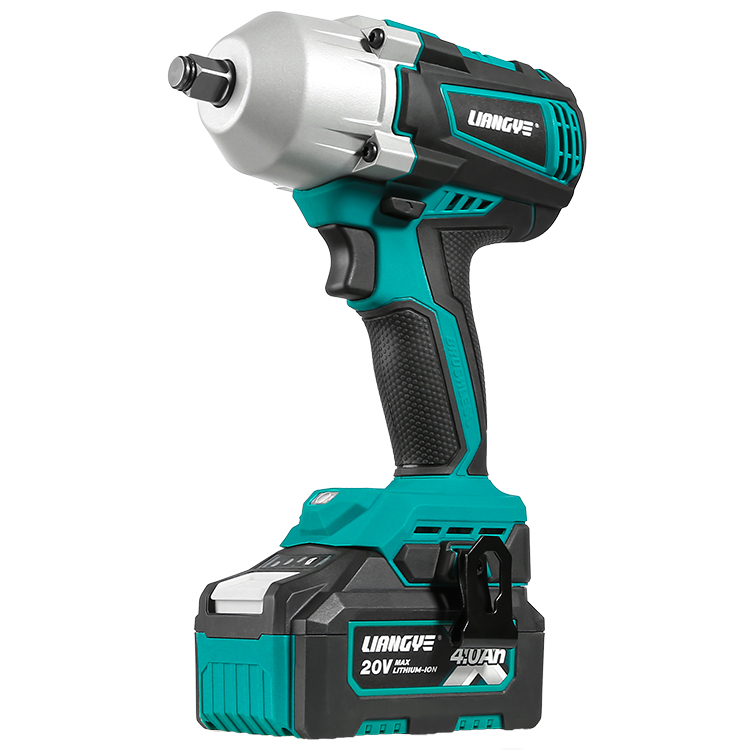
Choosing the perfect tool for your garage often feels like a high-stakes guessing game. You might buy an underpowered model. It fails miserably on stubborn, rusted bolts. Or, you might overspend on a heavy, bulky behemoth. A massive tool causes severe wrist fatigue and easily over-torques delicate fasteners. Thankfully, modern lithium-ion technology changed everything. It largely eliminated the need for loud pneumatic compressors in home garages. The cordless platform quickly became the default choice. Our goal is to provide an evidence-based framework. We want to help mechanics and DIYers evaluate confusing spec sheets accurately. You will learn how to determine exact cordless impact wrench torque requirements for specific vehicle components. This knowledge helps you make a confident, frustration-free purchasing decision. Let us demystify the numbers and find the right tool for your specific garage needs.
Key Takeaways
Torque specs are highly contextual: "Nut-busting" (breakaway) torque is the critical metric for automotive teardowns, not fastening torque.
The 1/2-inch rule: A 1/2-inch drive size is the undisputed "sweet spot" for 90% of automotive repairs, balancing power and tool longevity.
Ecosystem lock-in: Choosing a 20V impact wrench is as much about investing in a battery ecosystem as it is about the tool itself.
Supplemental tools are mandatory: An impact wrench never replaces a manual torque wrench for final fastening.
Evaluating Specs: Fastening Torque vs. Nut-Busting Torque
Manufacturers love to print massive numbers on their packaging. You must decode these claims carefully. The big number on the box is often misleading. It usually highlights the tool under perfect laboratory conditions. You must understand the critical difference between fastening torque and breakaway torque.
Fastening torque refers to the forward rotational force. It drives the bolt into the material. Nut-busting torque, also known as breakaway torque, operates in reverse. It provides sudden, violent rotational strikes. It knocks stubborn fasteners loose. For automotive teardowns, breakaway torque is the only metric you should truly scrutinize.
You also face the "previous mechanic" factor. Factory torque specs rarely apply to real-world teardowns. A lug nut might require 100 ft-lbs from the factory. However, it easily requires 400+ ft-lbs of breakaway torque years later. Why does this happen? The previous technician might have over-tightened it. They might have cross-threaded the fastener. If you live in a "rust belt" area, road salt causes severe galvanic corrosion. This corrosion literally welds the threads together. You need significant torque redundancy to overcome these obstacles.
Always seek independent verification before buying. Do not blindly trust laboratory marketing claims. To find the truth, follow these simple steps:
Search for independent third-party reviews online.
Look for channels utilizing accurate digital dynamometers.
Compare the real-world breakaway figures against the manufacturer's box claims.
Watch how long the tool takes to achieve its maximum output.
Real-world testing reveals actual performance. It protects you from disappointing purchases.
![Article image]()
How Much Cordless Impact Wrench Torque Do You Actually Need?
Power requirements vary wildly depending on your daily tasks. You must match the tool to the job. Buying too much power risks shearing small bolts. Buying too little leads to frustration.
For light-duty tasks, you need under 250 ft-lbs. This range handles interior work perfectly. It works well for basic engine bay components. You can tackle spark plugs and plastic valve covers. Caution: Light-duty jobs are often better suited for manual ratchets. A power tool easily strips soft aluminum threads if you lose focus.
The medium-duty category sits between 250 and 600 ft-lbs. This is the undisputed "sweet spot." It is ideal for standard automotive cordless wrench applications. It covers lug nuts smoothly, which typically require 80–150 ft-lbs. It easily removes stubborn brake caliper bolts. It handles basic suspension components without bogging down.
Heavy-duty tasks demand 650 to 1000+ ft-lbs. You need extreme force for rusted suspension linkages. Axle nuts require massive breakaway power. Mechanics also face notorious stress-tests, like the infamous Honda crankshaft pulley bolt. These scenarios demand absolute power.
We recommend a simple decision matrix. Size up to a high torque impact wrench only under specific conditions. Buy one if you frequently work on heavy-duty diesel trucks. Buy one if you tackle aged suspensions regularly. Buy one if you live in high-corrosion environments. Otherwise, a mid-torque model serves you better.
| Duty Level | Torque Range (ft-lbs) | Common Automotive Tasks | Ideal Tool Type |
| Light-Duty | Under 250 | Interiors, spark plugs, valve covers | 3/8-inch Compact |
| Medium-Duty | 250 – 600 | Lug nuts, brake calipers, shocks | 1/2-inch Mid-Torque |
| Heavy-Duty | 650 – 1000+ | Axle nuts, rusted linkages, crank pulleys | 1/2-inch High-Torque |
Drive Size and Power Platform: Making the Right Investment
Selecting the correct drive size changes your workflow entirely. You have three primary options. Each size serves a distinct purpose.
1/4-inch and 3/8-inch: These sizes excel in tight spaces. They slip easily into cramped engine bays. They save massive amounts of time on small fasteners. However, they lack the physical anvil mass for heavy automotive teardowns.
1/2-inch: This is the undisputed industry standard for automotive use. The larger anvil transfers energy efficiently. It saves your wrists from brutal kickback. It also prevents snapped socket adapters during heavy use.
You must also evaluate battery architecture. Treat a battery impact wrench as a long-term garage investment. You are buying into an ecosystem. Currently, 18V and 20V systems dominate the market. They offer the best power-to-weight ratio for automotive work. A solid 20V impact wrench provides enough voltage for heavy tasks while remaining reasonably lightweight. Once you own the batteries, adding bare tools becomes highly economical.
Motor technology matters just as much as voltage. You should consider a brushless impact wrench a baseline requirement. Older brushed motors create physical friction. They waste energy. Brushless motors communicate electronically with the battery. This smart interaction provides better battery efficiency. It guarantees a longer tool life. It also generates significantly less heat under a heavy load.
Hidden Costs and Setup Requirements
A bare tool cannot fix a car by itself. You must prepare for mandatory setup requirements. The most critical requirement involves your sockets. We strongly warn against using standard chrome sockets. Chrome Vanadium (Cr-V) is hard and brittle. It shatters violently under high torque impacts. Flying metal shrapnel causes severe injuries.
Instead, budget for a comprehensive set of impact-rated sockets. These are usually forged from Chrome Molybdenum (Cr-Mo). This metal alloy flexes slightly under stress. It absorbs the violent hammer blows safely. You need both metric and SAE sets. You also need shallow and deep socket variants to reach recessed bolts.
Next, address the "parking lot mechanic" dilemma. Many DIYers only use their tools twice a year for seasonal tire changes. If this sounds like you, battery degradation becomes a serious risk. Lithium-ion cells hate neglect. Sitting idle at zero percent capacity destroys internal chemistry. Storing them at full charge in a hot garage degrades them rapidly. You must practice proper storage habits. Avoid extreme temperature swings. Store your batteries at roughly a 50% charge during long off-seasons.
Finally, understand your tool's mechanical limits. An impact wrench is fundamentally an extraction tool. It is not an all-in-one automotive solution. Mechanical complements remain absolutely essential. You still need a long, heavy-duty breaker bar. You also need a freshly calibrated manual torque wrench. These companions complete your garage setup.
Operational Safety and Best Practices (Avoiding Over-Torque)
Power tools demand immense respect. If you misuse them, you will destroy expensive car parts rapidly. The most common mistake involves final tightening. You should never use impact wrenches for the final tightening of sensitive components. Lug nuts, oil drain plugs, and engine bolts require delicate precision.
Over-torquing leads to catastrophic failures. It stretches metal threads beyond their elastic limit. It warps delicate brake rotors instantly. Worst of all, it shears bolt heads off entirely. Extracting a sheared bolt from an engine block is a nightmare. It costs days of labor and immense frustration.
We highly recommend the 20% rule for basic reassembly tasks. Follow this process to stay safe:
Thread the fastener by hand first to prevent cross-threading.
Select the lowest power setting on your wrench.
Apply roughly 20% of the tool's maximum capability.
Snug the fastener gently until it barely seats against the surface.
Put the power tool away immediately.
Finish the job to precise factory specifications using a manual torque wrench.
What happens when you encounter a hopelessly stubborn bolt? If the wrench maxes out and nothing moves, stop immediately. Do not hold the trigger indefinitely. Continuous hammering achieves nothing. It simply damages the tool's internal anvil. It quickly overheats the electric motor. Instead, spray a liberal coat of quality penetrating oil. Let capillary action pull the oil into the threads for ten minutes. Then, grab a long breaker bar. Break the initial rust seal manually. Once the rust cracks, use the power tool to spin the fastener out quickly.
Conclusion
Evaluating tool specifications does not have to be intimidating. By understanding the difference between breakaway and fastening force, you can filter out marketing noise easily. Keep these final action-oriented steps in mind:
Follow the shortlist logic: For general DIY automotive repair, a 1/2-inch mid-torque brushless 20V impact wrench provides the best overall utility.
Commit to an ecosystem: Choose a brand platform that aligns with your future garage expansion needs.
Verify real-world data: Always research independent breakaway tests rather than relying strictly on box specs.
Equip properly: Always pair your new purchase with Cr-Mo impact sockets and a reliable manual torque wrench.
FAQ
Q: Can an impact wrench be too powerful for car repairs?
A: Yes, excessive torque on light fasteners causes immediate shearing. High-torque models are also very heavy and quickly fatigue the user. A mid-torque model is generally preferred for daily automotive use.
Q: Can I use a cordless impact wrench to tighten lug nuts?
A: You can use it on the lowest setting to lightly seat them. However, final torque must always be applied with a manual torque wrench. This ensures driving safety and prevents warped brake rotors.
Q: Why is my cordless impact wrench not removing a bolt?
A: It could be low battery output or a cold battery cell. You might be using a non-impact socket that absorbs the kinetic energy. Finally, the required breakaway torque might simply exceed the tool's rating, especially on severely rusted suspension parts.